






Stumbling Stones: Memory Walks with Us
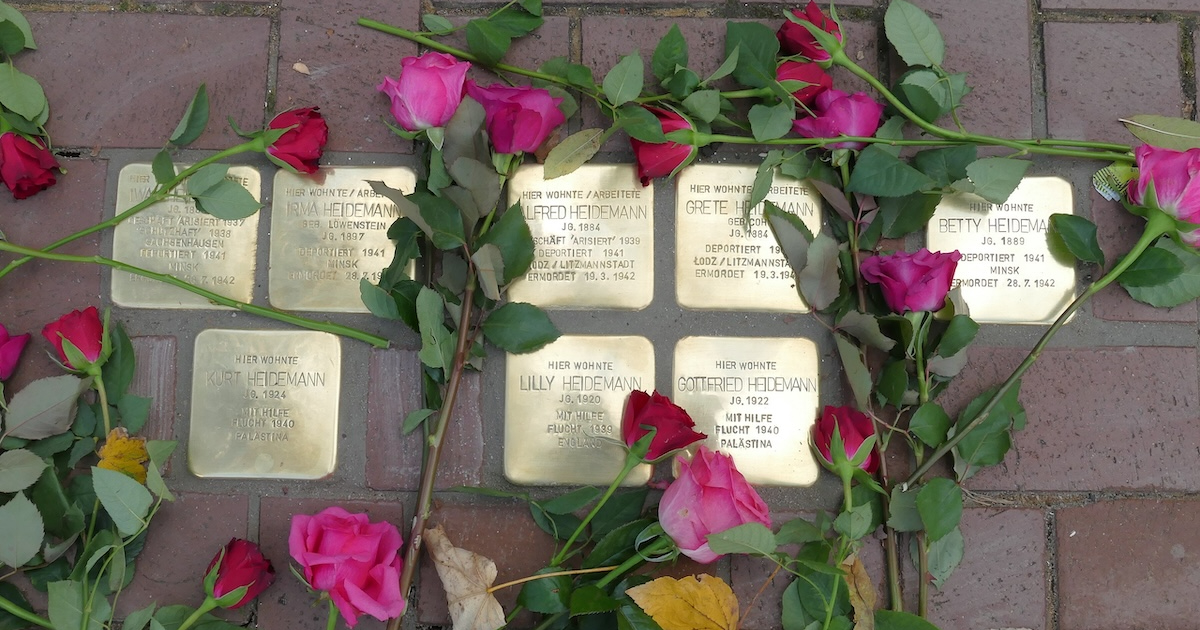
Heidemann Family (C) ChikagoDeCuba
Walking through the streets of many European cities, you can “stumble” — more with your eyes than your feet — upon small brass plaques the size of cobblestones (10x10 cm) embedded in the pavement. These are the stumbling stones (Stolpersteine in German), a widespread memorial project conceived by German artist Gunter Demnig to remember victims of Nazi persecution. Each stone is a fragment of personal history: a name, date of birth, address, and often a date of deportation or death. Placed in front of the last freely chosen homes of the victims, these small plaques aim to transform urban space into an exercise of memory.
The project began with the placement of the first stumbling stone in front of Cologne’s city hall in 1992 and quickly spread across Europe with the goal of restoring identity to those reduced to numbers in Nazi camp records. The stones are laid on the initiative of local communities, schools, memory organizations, and families, with strong civic involvement that sometimes intertwines with historical research to reconstruct victims’ biographies. By August 2024, the project had exceeded 107,000 stones installed in nearly 1,900 cities across 30 European countries, and new placements often occur on January 27 each year for the International Holocaust Remembrance Day. As is well known, the date was chosen to commemorate the breaching of the gates of the Auschwitz concentration and extermination camp.
In Italy too, stumbling stones are now present in many cities, often placed in front of the last homes of victims of Nazi-fascist persecution or at the places from which they were deported. According to available data, approximately 3,400 stumbling stones have been installed in over 420 Italian municipalities, distributed across nearly all regions from North to South of the peninsula. Rome was the first Italian city to host stumbling stones in 2010, followed by numerous further placements in subsequent years, reaching the current 479.
Looking at the numbers of stones installed, after Rome come Milan with 255 stones, Venice with 197, then Turin, Trieste, Parma… But it is obviously not just a matter of quantity. The presence of stumbling stones in hundreds of large and small Italian locations (from Bolzano to Ferrara, from L’Aquila to Prato, from Mantua to Naples) transforms cities into maps of individual stories that would otherwise risk falling into oblivion. The stones are laid in memory of all victims of Nazi-fascist violence, regardless of the ethnicity or religion of those who lost their lives.
These small stones are called “stumbling” stones, but the expression should be understood not in a physical sense, but visually and emotionally: the idea is that the gleam of the brass makes passersby stop to read and reflect when they encounter the work, even by chance. Because memory should not be confined to separate places, but can become part of our daily lives, inviting anyone passing by not to forget. The name is indeed borrowed from Paul’s Letter to the Romans in the New Testament: “Behold, I am laying in Zion a stone of stumbling, and a rock of offense; but whoever believes in him will not be put to shame.”
The Perspective of the Gunter Demnig Foundation
A simple sidewalk, an urban passage space exposed to everything and everyone, thus becomes a place of pause and reflection thanks to the work of artist Gunter Demnig and his collaborators. To learn more, we asked a few questions to Katja Demnig (managing director of the Foundation TRACES - Gunter Demnig), asking her what kind of exercise of memory can arise from accidentally stumbling upon these small memorials often encountered by chance, far from official commemoration sites... “The major and distinctive difference between our art monuments and other monuments is that they can be seen and noticed by everyone on their daily commute to work, school, or the doctor. They bring the history of the victims of National Socialism back to where the suffering of these people began. In this way, history is brought to life and kept ever-present”.
Each stumbling stone bears a name, a date, and an address. Can this minimal precision suffice to restore the humanity and complexity of people too often reduced to numbers in history? Demnig responds that the Stolpersteine “restore the humanity of the victims by giving them back their names, lifting their stories out of the anonymity of the masses, and telling their stories in the very places where they once laughed, loved, celebrated, worked, and led normal lives until terror descended upon them. The stones clearly show how integrated the victims of National Socialism were everywhere until Hitler's so-called seizure of power”.

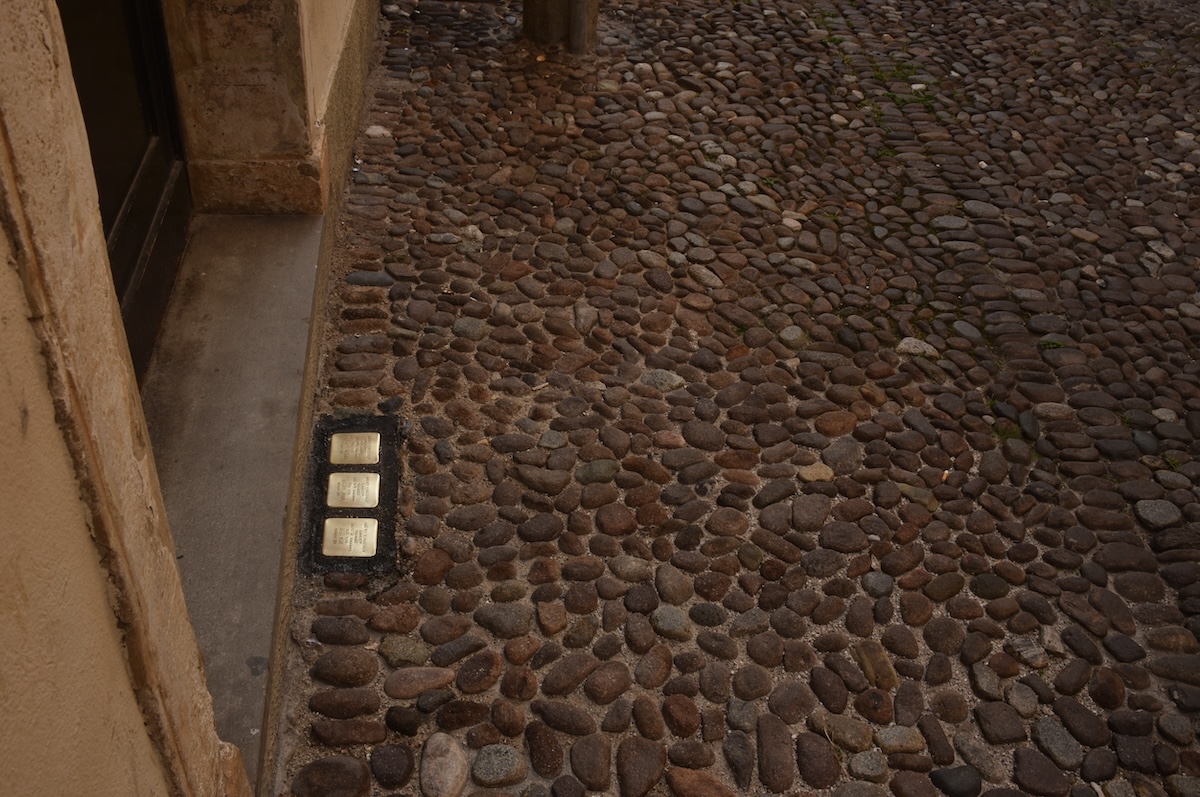
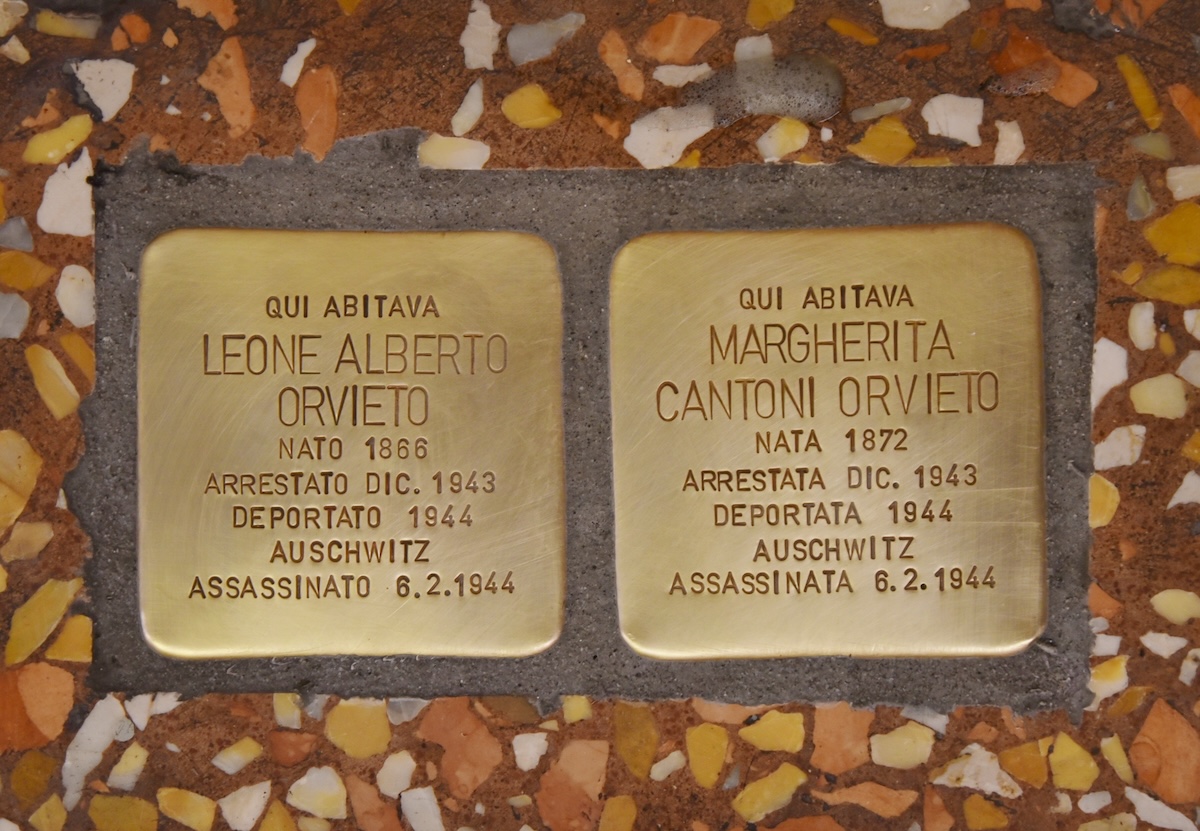
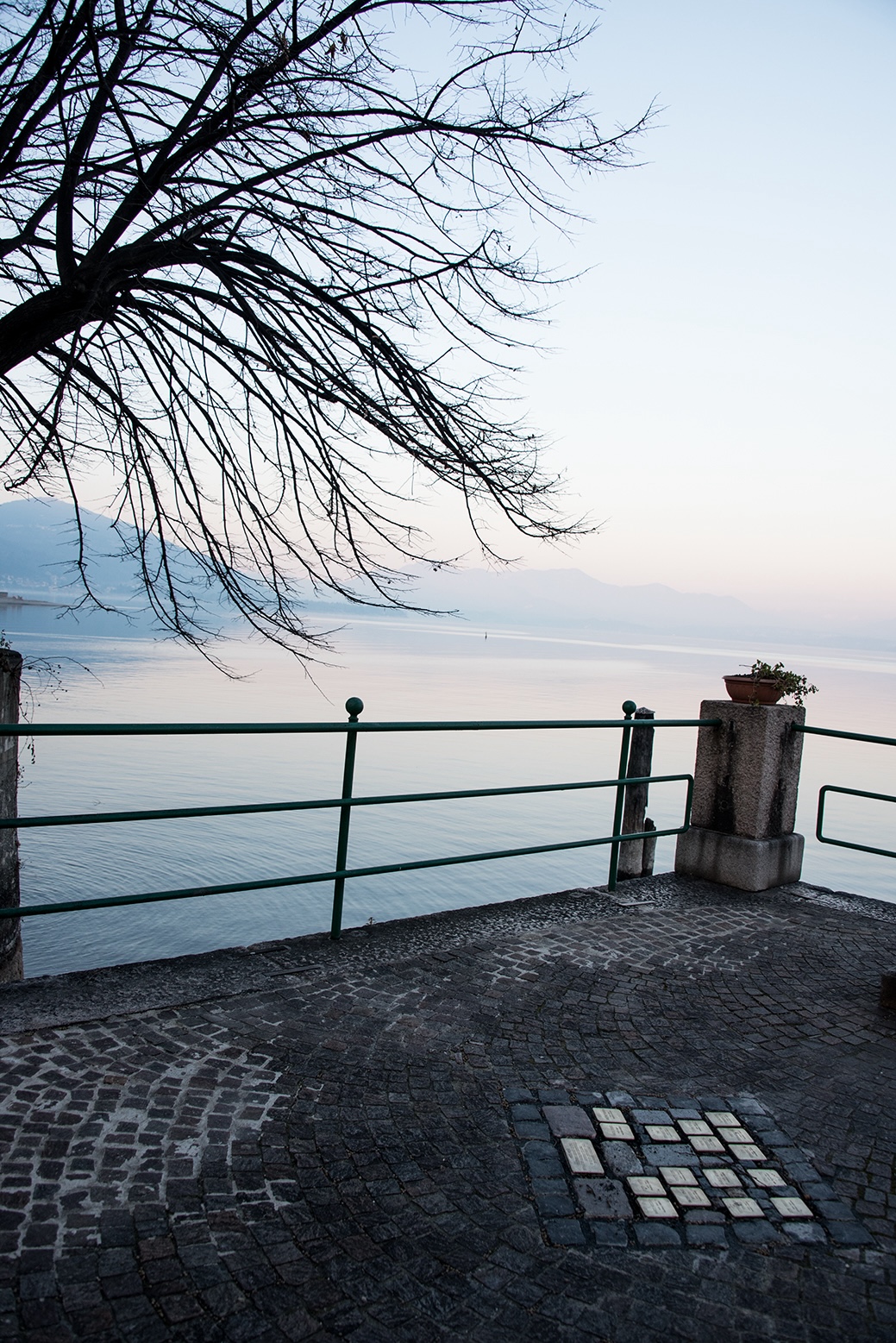

These stones do not explain or interpret, but simply invite people to stop and reflect, leaving the responsibility for meaning to those who pass by. We ask the managing director if over the years the foundation has gathered feedback showing that this approach truly works, and she tells us that they receive “feedback from viewers of the Stolpersteine every day. These are often small, moving personal stories that viewers tell us. For example, they are often surprised at the seemingly quiet and peaceful areas where Nazi victims were once persecuted, humiliated, and deported, or they stumble upon the large number of people who were deported from nursing homes (simply because they were old or had a disability), or they are shocked by the fates that even the youngest children in the families had to suffer”.
The purpose of the stumbling stones is thus to help those who encounter them “ become more cautious when people try to divide society with hatred and incitement. Of course, we cannot reach every person in society — adds Katja Demnig — but if we can get new people to talk about, discuss, and reflect on this terribly dark period in German history, and thus understand that inciting hatred against ‘the others’ is always the beginning of the end, then we will have taken an important step toward preserving democracy and mutual understanding among people”.
Today, the memory of the Holocaust and other Nazi-fascist crimes is becoming ever more distant in time and direct witnesses are fewer and fewer; for this reason, perhaps public art can play a role. According to Demnig, “art in public spaces can and should stimulate many thought processes, whether through provocative or more subtle food for thought. It should raise moral questions, contribute to conceptual clarity, help to recognize complex structures, stimulate discussion, and much more. Ultimately, it should offer viewers space to form their own opinions and help them to position themselves”.


